 Lowest price guarantee — We will beat any price!
 Free worldwide shipping for orders over $50



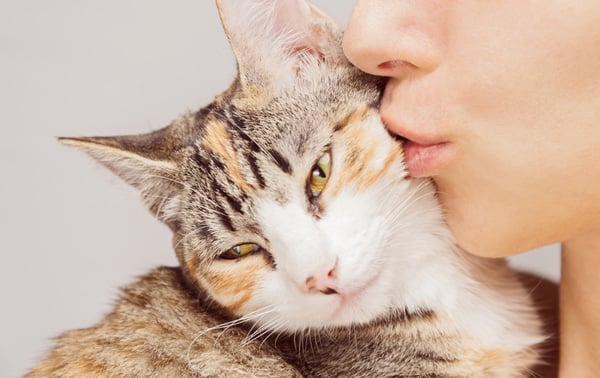
Purring begins in your cat’s brain where rhythmic, repetitive nervous system activity sends a message to the muscles in his larynx. This causes the larynx, or voice box, to twitch anywhere from 25 to 150 vibrations per second. When your cat inhales and exhales, this prompts his vocal cords to separate, producing the comforting sound and vibration we know as purring. While vets are not entirely sure why cats purr, they generally agree it is a soothing exercise for felines. Some compare the behavior to our own smiles: People smile when they’re happy, but also when they feel nervous or want something. In the same way, then, a cat’s purr can be an anxious behavior or attempt at grabbing our attention as much as it can be a sign that all is well. If your cat is relaxed, with his eyes closed and tail still, he’s likely giving you a big grin. But if he purrs around mealtime, for example, the purr is more likely a grab for attention than a sign of satisfaction.
It’s worth noting that not all cats in the animal kingdom can purr. While domestic cats can create the soothing vibrations, their cousins who roar cannot purr because the structures surrounding roaring cats’ larynxes aren’t firm enough. While roaring species make these loud noises to protect their prides and territory, smaller cats are more likely to hunt alone, spending long periods resting in between chases. They mark their territories with scent glands, and reserve purring for time spent lying around, which may help stimulate bones so they don’t become weak during the rest.
Comments
No comments yet. Be the first to share your thoughts.
Leave a comment