 Lowest price guarantee — We will beat any price!
 Free worldwide shipping for orders over $50



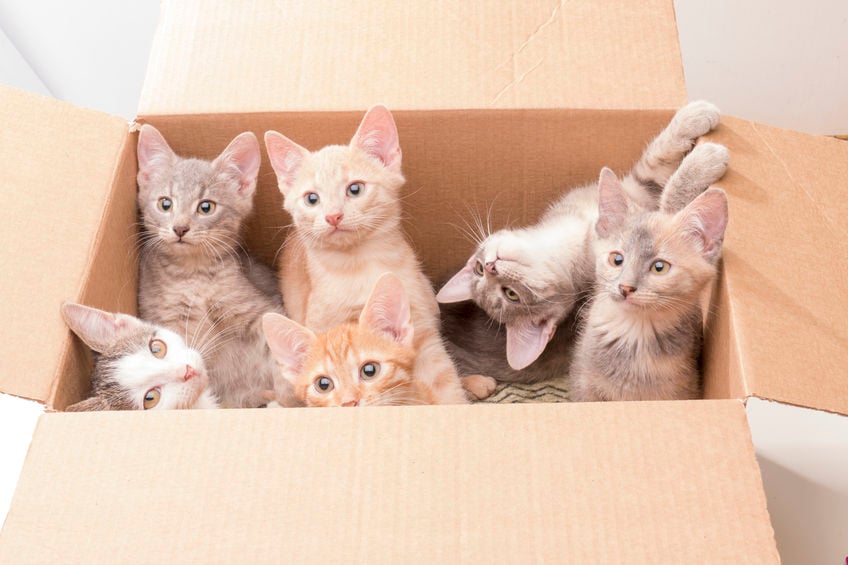
Predators by nature, cats are experts at finding spots to hide while watching their prey. Though our domesticated pets no longer need to hunt to survive, the instinct remains and cardboard boxes provide the perfect vantage for scoping out passersby. By hiding, your cat can quickly dash out and catch whatever walks past—though his target is more likely to be your feet than his next meal these days.
Cats’ love for boxes stretches to comfort, too. Small spaces provide the ideal retreat or “safe zone" for Kitty to have an undisturbed catnap. This is important, given that cats can sleep up to 20 hours a day and don’t want anyone sneaking up on them while they’re asleep. Cats also naturally have a higher body temperature than humans—around 100 to 102 degrees Fahrenheit, compared to our 98.7 degrees—so they are more comfortable in warmer settings. Boxes provide great insulation, so it’s no wonder owners often find their felines nestled up inside one.
Because they offer safety and security, boxes can help put nervous pets at ease. When moving, try placing a box or two in your new home to give your cat a safe space from which to explore his new surroundings. When introducing a new pet to the household, or if you’re away for long periods of time, leave an empty box out to help calm your cat. A report published in Applied Animal Behaviour Science backs claims that boxes help relieve stress: Researchers found that, among a group of cats arriving at an animal shelter, those randomly assigned to receive a box adapted to their new surroundings faster than their box-free peers. It’s our feline friends love cardboard boxes and the comfort and security they provide.
Comments(1)
Ik dacht dat alleen mijn kat zo gek op kartonnen dozen was. Hij vind het heerlijk om erin te kruipen. Vooral een doos met zo'n rond gaatje erin vind hij prachtig. Dan steekt hij zijn poot er door en dan wil hij spelen. Hij kan echt uren in een kartonnen doos blijven liggen en vindt het prima, als we het deksel dicht doen.
Ik dacht dat alleen mijn kat zo gek op kartonnen dozen was. Hij vind het heerlijk om erin te kruipen. Vooral een doos met zo'n rond gaatje erin vind hij prachtig. Dan steekt hij zijn poot er door en dan wil hij spelen. Hij kan echt uren in een kartonnen doos blijven liggen en vindt het prima, als we het deksel dicht doen.
Leave a comment