 Lowest price guarantee — We will beat any price!
 Free worldwide shipping for orders over $50



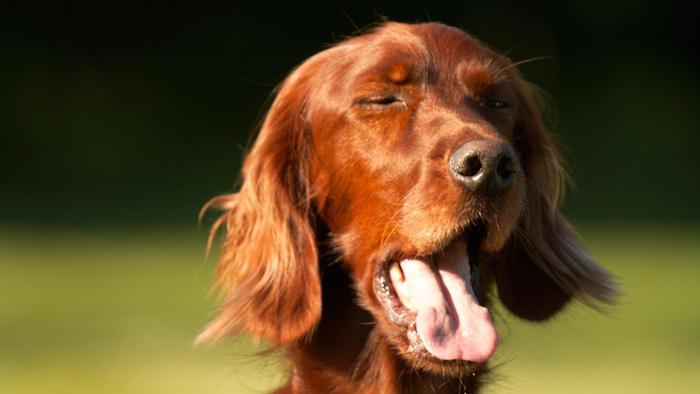
Reverse sneezing typically occurs when something irritates a dog’s soft palate (the fleshy bit at the back of the roof of his mouth) or throat. Whereas air is forced out through the nose in a regular sneeze, air is pulled rapidly in through the nose during a reverse sneeze. This causes a dog to make a loud snorting or gasping sound as he extends his neck and gulps in air. It is a disturbing display, but veterinarians agree that reverse sneezing is actually fairly common in dogs. Smalls dogs are more prone to it due to their smaller air passageways, as are breeds such as pugs and bulldogs with elongated soft palates. Episodes can last anywhere between a few seconds up to a few minutes and may appear in dogs at any stage of life.
Reverse sneezing doesn’t usually require treatment, but if it becomes a chronic problem, you should seek your veterinarian’s advice. As a general rule, if your dog is reverse sneezing more often than the average human sneezes, you should seek help. If allergies are the root of the problem, for example, your vet may prescribe antihistamines. He can also rule out other causes such as respiratory tract infections or foreign bodies that could be blocking your dog’s airway. Asthma, on the other hand, is vastly less common in dogs and is typically accompanied by a chronic cough. Though rare, dogs with asthma likely struggle more with exercising and fatigue and the condition is almost always caused by an allergic reaction to something in the environment.
Comments(2)
My dog has been reverse sneezing since December 2017. He has had multiple tests...rhinoscopy, no fungus, bacteria, cancer or foreign body have been found. He was on prednisone but with his Cushings I had to get him off of it. He has bèen on benadryl which helps but makes him lethargic. I am going to give him a Cytopoint injection today to see if this helps. I hate him suffering...any suggestions. I found him in the Peruvian Amazon Rainforest...he is part Peruvian Inca Orchid mixed. About 14yrs old...50lbs, but overweight due to the cushings. I've had him for over 10 yrs with perfect health. Thanks for listening...any suggestions are greatly appreciated.
Hello did the cytopoint help the reverse sneezing? We are in a similar situation. Hope it did!
Leave a comment